
Managing temperature-sensitive food items requires an end-to-end system that preserves product quality from processing to final delivery. This system centers on maintaining specified temperatures, preventing thermal excursions, and coordinating handling steps across storage, transport, and distribution nodes. Logistics personnel typically balance equipment selection, handling procedures, regulatory compliance, and data capture so that frozen items remain within target ranges and retain intended shelf life and safety characteristics.
Effective frozen-product logistics typically involves coordinated processes rather than a single technology. Key activities often include controlled freezing, insulated packaging, refrigerated transport, monitored warehousing, and documented handoffs between parties. Each activity can introduce temperature risk, so firms commonly implement verification points and contingency procedures to limit exposure and to document conditions for traceability and quality control.
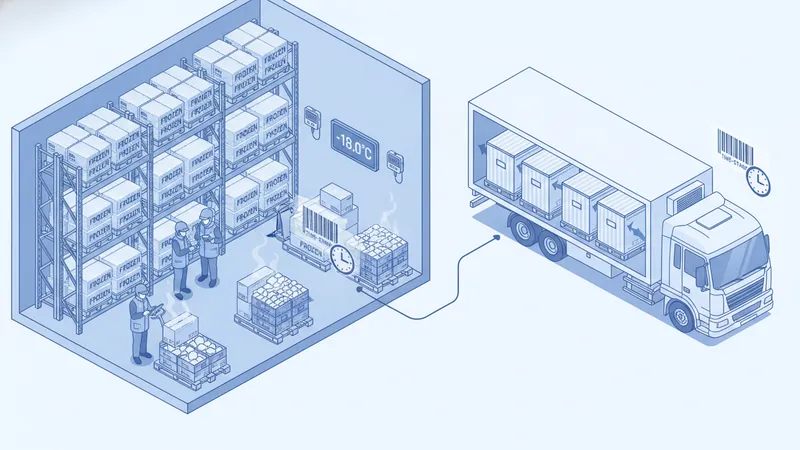
Regulatory frameworks and food-safety standards often frame operational requirements for frozen supply chains. Requirements typically include documented temperature ranges, validated cleaning and sanitation practices, and records of temperature monitoring. Compliance can involve inspections and structured recordkeeping so that traceability is available in case of quality incidents. Organizations often align internal procedures with widely used standards and may use validation testing to demonstrate that freezing and storage steps meet specified parameters.
Packaging and palletization play a practical role in thermal protection and handling efficiency. Insulating materials, phase-change materials, and correct pallet stacking patterns can influence heat transfer and airflow within a load. Packaging selection often considers product fragility, required holding time, and handling environments; for example, some products may require secondary barriers or sealed cartons to limit moisture migration. Proper labeling and segregation of batches can also assist downstream inventory rotation and quality checks.
Inventory control systems for frozen foods commonly integrate temperature logs with stock-keeping records to support first-expiry-first-out or similar rotation approaches. Automated alerts tied to monitoring systems may notify responsible staff when readings deviate from setpoints, enabling review and corrective response. Inventory visibility across warehouses and transport may improve planning for replenishment and reduce time that products spend in transitional zones where temperature control may be less consistent.
Temperature excursions and their mitigation are a focus for preserving quality. When excursions occur, organizations often assess exposure duration, recorded temperatures, and product-specific vulnerability to determine disposition options, which can include rework, testing, or removal from distribution. Corrective actions commonly involve root-cause analysis, equipment maintenance, staff retraining, and adjustments to handling practices to reduce recurrence while maintaining documented evidence of steps taken.
In summary, frozen product logistics is a coordinated set of processes that relies on controlled freezing, thermal protection, monitored storage and transport, and documented handoffs to maintain quality. Multiple equipment types, monitoring methods, and procedural controls typically work together to reduce risk and support traceability. The next sections examine practical components and considerations in more detail.
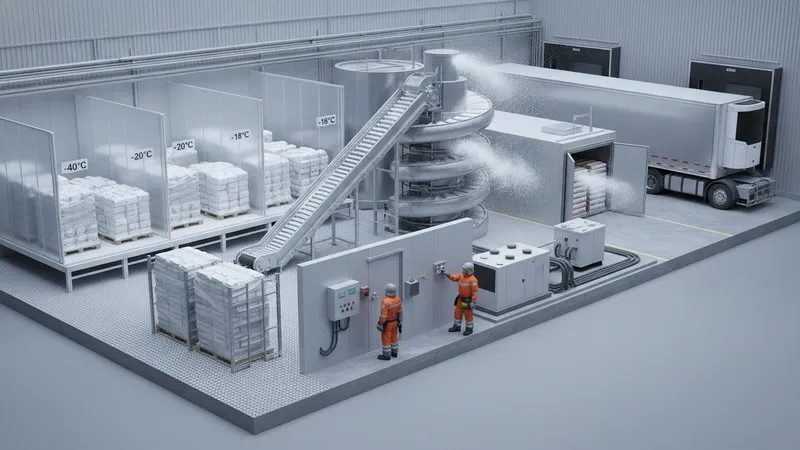
Equipment selection for frozen-product logistics typically focuses on the ability to reach and hold specified temperatures under expected loads. Blast freezers, spiral freezers, and tubular freezers are among freezing technologies used to rapidly lower core temperature and limit ice crystal growth. For storage, multi-room refrigerated warehouses and pallet freezers provide staged environments that may be set to different holding temperatures. Equipment capacity, redundancy, and maintenance schedules often influence overall resilience; organizations often factor in peak throughput, energy usage, and accessibility for inspection and cleaning when sizing systems.
Refrigerated transport units vary by size and refrigeration technology and may operate as mechanical systems or use cryogenic cooling for specific applications. Transport planning typically accounts for expected transit duration, ambient conditions, and vehicle insulation performance. Power source reliability and regular preventive maintenance are common considerations because mechanical failures during transit can result in temperature excursions. Some operators incorporate backup cooling options or contingency transfer plans to address equipment downtime without prescriptive guarantees.
Airflow management inside storage and transport units can influence temperature uniformity. Proper pallet placement, spacing, and load density often affect circulation of cooled air and the potential for hotspots. Load profiling and pre-cooling procedures may be applied so that products enter storage at intended temperatures, which can reduce recovery time and lessen stress on HVAC systems. These considerations often form part of facility design or standard operating procedures to support consistent thermal control.
Electrical and mechanical system monitoring often complements physical refrigeration equipment. Routine checks of refrigerant levels, compressor performance, door seals, and insulation integrity may be scheduled to reduce failure risk. Where critical loads are present, operators often employ redundant refrigeration circuits or emergency power arrangements to improve continuity. These approaches are typically framed as risk-mitigation considerations rather than guarantees of uninterrupted performance.
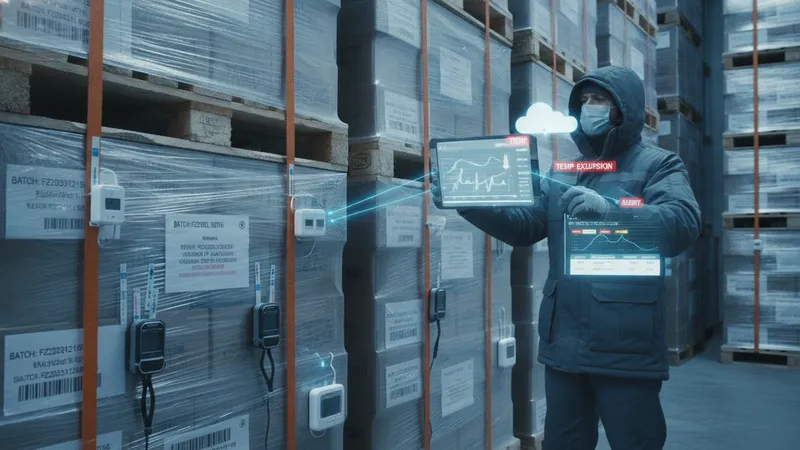
Temperature monitoring is central to documenting that frozen products have been maintained within required ranges. Systems range from single-use temperature indicators to continuous electronic data loggers and Internet-connected sensors. Recorded data often serve multiple purposes: internal quality checks, regulatory compliance, and evidence during incident investigation. Selection of monitoring technology commonly reflects needed sampling frequency, required accuracy, cost considerations, and the degree of automation desired for alerts and reporting.
Data management practices influence traceability and response capabilities. Time-stamped temperature records linked to shipment, batch, or pallet IDs can support root-cause analysis when deviations occur. Cloud-based platforms often enable centralized access to historical records and configurable reporting, while local data retention may be used where connectivity is limited. Interoperability with warehouse management systems and transport management systems can improve visibility across nodes and support coordinated decisions about product disposition.
Calibration and validation of monitoring devices are typical quality controls that help maintain confidence in recorded measurements. Periodic calibration against reference standards and documented maintenance procedures are common practices that may be expected by auditors. When monitoring identifies excursions, documented investigation steps and documented outcomes are often required to show that appropriate review and corrective action took place, and to preserve traceability across the supply chain.
Considerations for selecting monitoring solutions often include sensor placement, sampling intervals, and alarm thresholds. For example, placing sensors near product cores or representative load locations can yield more actionable data than ambient sensors alone. Sampling frequency may be increased during high-risk phases such as handoffs or extended transit. These choices are typically framed as operational trade-offs between data granularity, cost, and manageability.

Warehouse layout and material-flow patterns can affect thermal performance and handling efficiency. Segregated temperature zones for different product types and clearly defined staging areas for incoming and outgoing goods often reduce cross-contamination risk and temperature stress. Dock operations are a frequent focus because doors open and close, creating transient exposure; scheduling and dock-level procedures typically aim to minimize dwell time and to coordinate pre-cooling where practical.
Inventory control approaches commonly integrate shelf-life attributes and temperature-history information to prioritize dispatch. Systems may support first-expiry-first-out rotation, quality holds, and batch tracking to facilitate product traceability. For frozen goods with variable shelf stability, visibility into both time in storage and cumulative thermal exposure can inform decisions about shipping priority and distribution routing without asserting absolute outcomes.
Handling protocols for pallet movements, container staging, and worker procedures are often standardized to reduce risk of temperature abuse. For example, minimizing manual delays during transfer, using insulated transfer carts for short in-warehouse moves, and training staff on proper staging times can reduce exposure. These procedures are typically documented and periodically reviewed to reflect operational changes or lessons learned from incidents.
Maintenance of storage infrastructure, including defrost schedules, sealing of loading doors, and monitoring of refrigeration performance, often influences energy use and reliability. Preventive maintenance plans may align with usage patterns and seasonal demands to reduce the chance of unexpected failures. Organizations often balance maintenance windows with operational throughput needs, treating scheduling as a planning consideration rather than a fixed prescription.
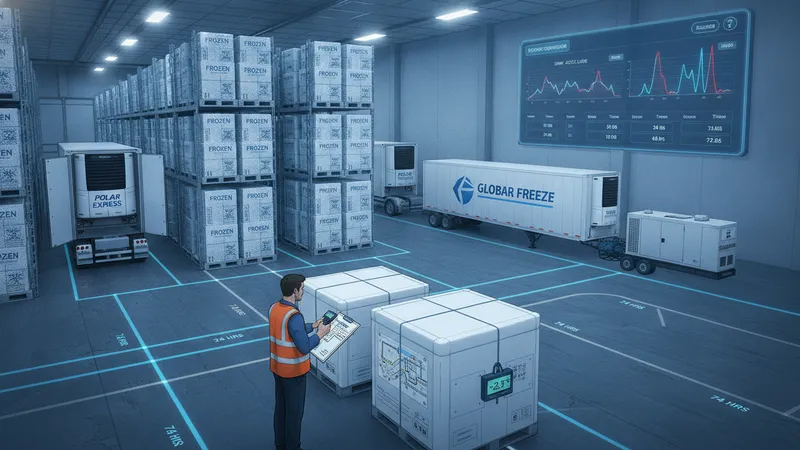
Route planning and carrier selection are practical elements in distributing frozen products. Planners commonly match load type, transit time, and required temperature profile to transportation modes and schedules. Consolidation strategies may reduce handling steps but can increase transit duration; conversely, direct shipments may shorten transit time but can affect cost structure and utilization. These trade-offs are typically assessed in terms of product vulnerability and service-level expectations without assuming universal applicability.
Handoff and transfer points are frequent sources of temperature risk. Clear documentation of responsibilities at each handoff, synchronized schedules, and use of sealed or monitored containers can reduce uncertainty. Some supply chains include contingency nodes where products can be transferred to alternate refrigerated capacity if an interruption occurs. Such contingency planning focuses on risk reduction and operational resilience rather than definitive prevention of all issues.
Last-mile delivery for frozen goods often introduces unique constraints such as urban routing, restricted delivery windows, and local handling conditions. Packaging designed for shorter distribution legs may differ from long-haul packaging in insulation profile or refrigerant choice. Coordinating carrier pickup windows and recipient readiness can reduce time outside controlled environments, and these coordination points are commonly addressed through documented carrier performance metrics and planning assumptions.
Performance measurement and continuous improvement typically rely on a mix of operational metrics: temperature compliance rates, incidence of excursions, on-time deliveries, and product disposition outcomes. Analysis of these metrics can identify process weak points and inform investments in equipment, monitoring, or revised procedures. Such analysis is typically presented as a tool for informed decision-making rather than as definitive prescriptions for all operations.